 English ReNews
Why Do Busy Days Still Feel Empty?
Most of us know the moment when a quiet question surfaces in the middle of an ordinary day: what is all this for? A look at why we crave days that lead somewhere.
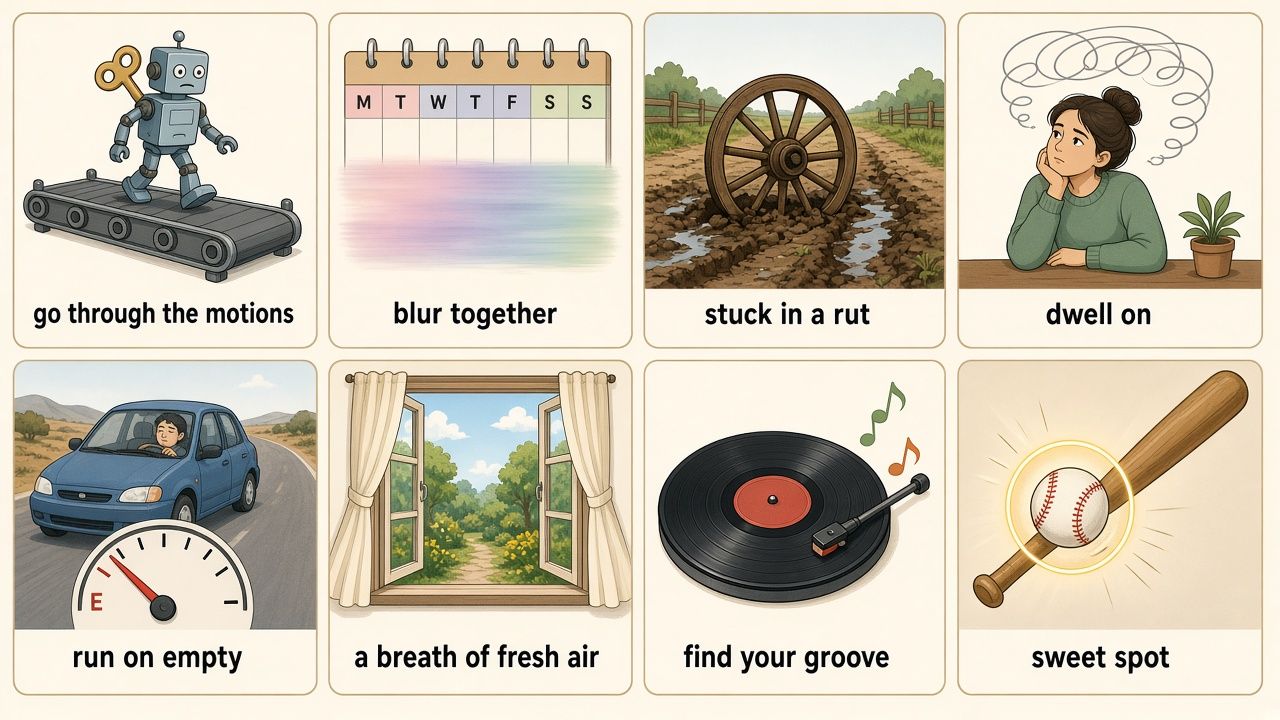
Every so often, usually on an ordinary weekday, a certain question shows up. It isn't dramatic, and it doesn't arrive with music. It sounds more like a thought you have while waiting for a file to load: what is all this for?
For many people, each day looks like the last. They answer one more email, sit through one more meeting, and go through the motions until the workday ends.
The question points to something ordinary: we want our days to lead somewhere. Not toward a grand destiny, just toward something that feels worth the effort. When that's missing, it shows up in small ways. The days blur together, and people say they're stuck in a rut, though nothing is actually wrong. Sunday evenings start to feel heavy. At night, a throwaway comment from a meeting plays on repeat, and people dwell on it far longer than it deserves.
Then there's the kind of tiredness that sleep doesn't fix. Everyone knows someone who says "I'm fine, just busy" while visibly running on empty. Busy and purposeful aren't the same thing, and most of us can feel the difference.
The fix, when people find one, is rarely a grand gesture. They talk about the relief of something new: an evening class, a Saturday volunteer shift, a different route home. Described afterward, these changes sound small, but the difference is big. A new setting can be a breath of fresh air, the way an open window clears a stuffy room. Once the awkward first weeks pass, people often find their groove and wonder why they waited.
Work can do the same when the fit is right. Tasks that hit the sweet spot, challenging enough to hold your attention but still doable, tend to make the day go by faster. Few people watch the clock when a problem is interesting.
None of this answers the question for good. It comes back, like the weather. But the fact that it keeps coming back says something. Most of us don't really crave more free time or less work. We crave the feeling that today counted for something.
Original article, inspired by a theme in a Psychology Today column by John Tsilimparis, MFT (Oct. 10, 2026): https://www.psychologytoday.com/us/blog/the-magic-in-the-tragic/202610/why-we-crave-purpose
Listen to the article
Tip: You can adjust the speed of the audio by clicking the 1.0x button.
Interesting words
These are the words that we think are interesting and worth learning.
to do something as a routine, without much enthusiasm or interest
to become or cause to become unclear or indistinct as separate things
feeling trapped in a dull, repetitive, and unfulfilling routine
to think about something for a long time, often worrying or being unhappy about it
to be exhausted, depleted, or drained of energy or resources, often to the point of being unable to function effectively
an expression used to describe something or someone that is very refreshing and pleasant, often because it is a change from what is usual
to find a comfortable and productive routine or way of doing something
A situation or position that is ideal or most effective.
Like what you've read?
Begin learning journeyWords stick best when you meet them again — and again, at just the right moments. That's why the Learning Journey brings you back to what you read at increasing intervals, so what you learn today actually stays with you.
How the Learning Journey Works
Movie Connection
Right after reading
Fill in the Blanks
The next day
AI Chat Tasks
2 days later
Fill in the Blanks
2 weeks later
Fill in the Blanks
2 months later
Why create a free account?
Track your progress across every article you read
Get reminded exactly when it's time for your next review — spaced repetition, done for you
Get AI tutor feedback tailored to what you actually write
Create your own Custom Journey from any words you want to learn — with a story, audio and exercises
Completely free, forever — takes about 30 seconds to sign up