 English ReNews
 Fatal crash raises road safety concerns
A fatal motorway collision renews debate over police pursuits, reckless driving, road safety, and the responsibilities of social-media platforms.
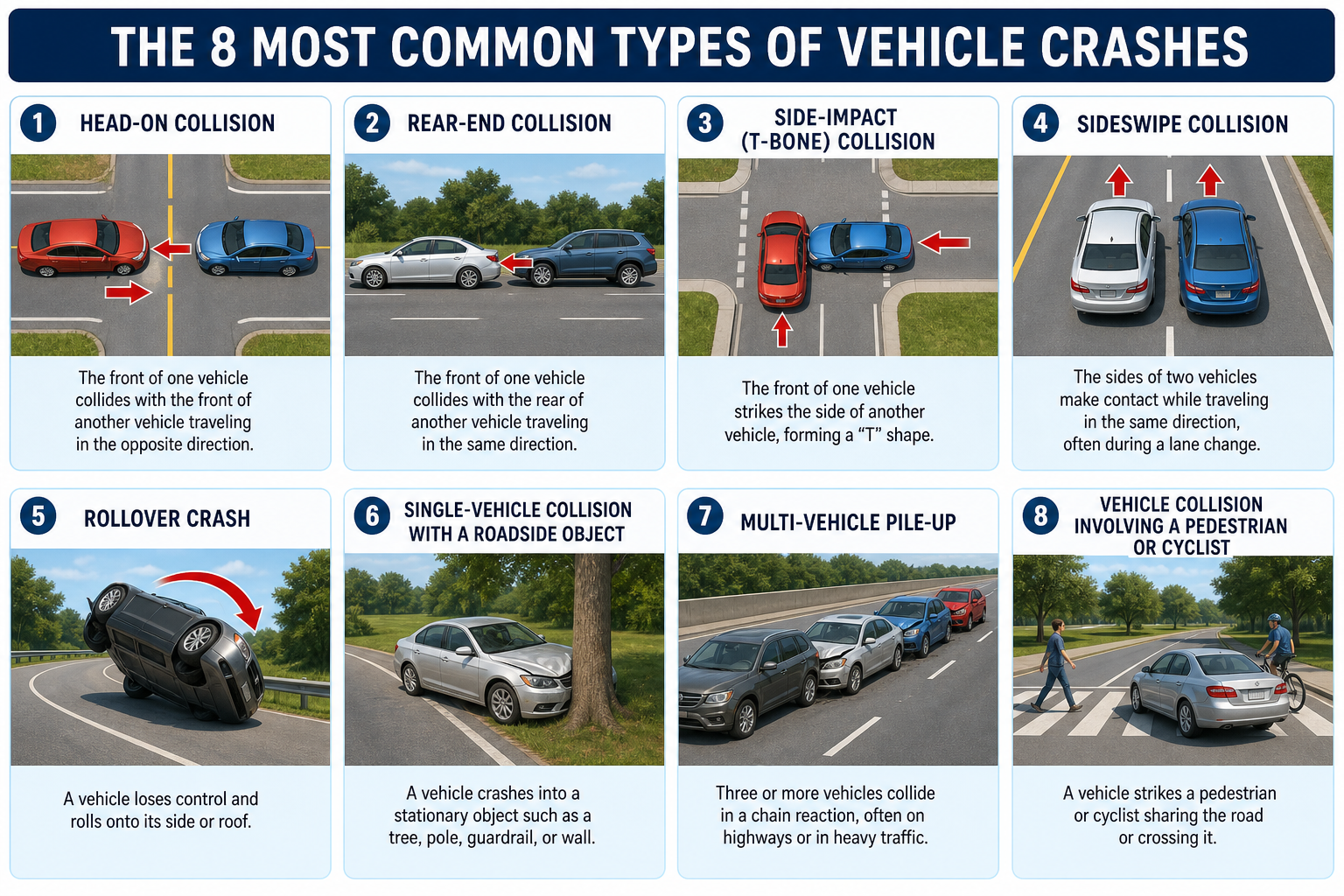
A fatal head-on crash in Ireland has raised concerns about police training, dangerous driving and the influence of social media.
Five teenagers were killed after a car travelled in the wrong direction on a motorway and collided with another vehicle. Several other people were seriously injured.
Before the crash, police tried to pursue the car and stop it. However, the driver took evasive action, making the situation more dangerous. Officers were eventually told to disengage and stop following the vehicle.
The incident has led to questions about whether police officers have enough training to deal with dangerous vehicle pursuits. There have also been calls for a harsh sentence for people who deliberately drive in a reckless way.
Another concern is social media. Videos of dangerous driving can attract attention online, and authorities are considering whether platforms could be in breach of their obligations if they fail to deal with such content.
The crash has left the local community numb with shock and grief. For the families involved, their lives have been turned upside down through no fault of their own.
The tragedy has also highlighted the danger to vulnerable road users. A pedestrian can be knocked down in seconds by a reckless driver.
The incident has renewed calls for better police training, stronger road-safety measures and greater responsibility from both drivers and social-media companies.
Based on events reported by the BBC https://www.bbc.com/news/articles/cj036d6vj09o This text is independently written for English-learning purposes.
Listen to the article
Tip: You can adjust the speed of the audio by clicking the 1.0x button.
Interesting words
These are the words that we think are interesting and worth learning.
to release or detach something, or to withdraw from a situation, especially in a formal or official sense
to follow or move after someone or something in order to catch or overtake them
a vehicle accident in which two or more vehicles collide directly into each other, resulting in one or more fatalities
A deliberate action taken to avoid a collision or other dangerous situation.
not thinking about the possible dangers or consequences of an action
not fulfilling their required responsibilities or commitments
lacking physical or emotional sensitivity
a strict or stern penalty, especially one imposed by a court.
To strike or collide with someone or something with force, often causing injury or death.
A person walking along a road or in a place where people walk, rather than traveling in a vehicle.
said of people whose lives have been severely disrupted or ruined by an unexpected and unfortunate event, often through circumstances beyond their control
🛑 DISENGAGE
🔊 /ˌdɪs.ɪnˈɡeɪdʒ/ (stress: GAGE)
🧠 Visualization: Picture a police car slowing down, switching off its siren, and increasing the distance from the vehicle ahead.
🤝 Collocations:
- disengage from a pursuit
- disengage from combat
- disengage the clutch
📍 Context: A formal verb used in policing, the military, machinery, work, and relationships. In police reports, officers may be instructed to disengage when continuing a pursuit is too dangerous.
✍️ Examples:
- Officers were told to disengage from the pursuit when the car entered a crowded street.
- Press the lever to disengage the parking brake.
- She disengaged from the argument before it became personal.
⚠️ Common Mistake: Use disengage from when leaving an activity: “disengage from the pursuit,” not “disengage of the pursuit.”
🔥 Native-Speaker Tip: “Disengage” sounds more controlled and official than simply “stop” or “leave.”
🚓 PURSUE
🔊 /pəˈsjuː/ (stress: SUE; US often /pərˈsuː/)
🧠 Visualization: See one vehicle following another along a winding road while officers constantly assess the danger.
🤝 Collocations:
- pursue a suspect
- pursue a career
- pursue legal action
📍 Context: Used formally for chasing someone and more generally for actively working toward a goal. Police pursue suspects; people pursue careers, interests, and opportunities.
✍️ Examples:
- Gardaí attempted to pursue the car but later stopped for safety reasons.
- He moved abroad to pursue a career in engineering.
- The family may pursue legal action against the company.
⚠️ Common Mistake: “Pursue” already means follow or chase; do not say “pursue after.”
🔥 Native-Speaker Tip: In everyday English, “chase” is more vivid; “pursue” often sounds official or purposeful.
💥 FATAL HEAD-ON CRASH
🔊 /ˈfeɪ.təl ˌhed.ɒn ˈkræʃ/ (stress: FA, HEAD, CRASH)
🧠 Visualization: Imagine two vehicles approaching from opposite directions in the same lane. Freeze the scene before impact and move both cars safely apart.
🤝 Collocations:
- fatal head-on crash
- head-on collision
- die in a crash
📍 Context: Common in news and official road-safety reporting. Fatal means that at least one person died. A head-on crash occurs when the fronts of two vehicles collide. Compare it with a rear-end collision, where one vehicle hits another from behind.
✍️ Examples:
- The road remained closed after a fatal head-on crash.
- A central barrier can reduce the risk of head-on collisions.
- Unlike a minor rear-end collision, the head-on crash caused life-threatening injuries.
⚠️ Common Mistake: “Fatal” describes an event that causes death, not merely one that is very serious.
🔥 Native-Speaker Tip: “Crash” is common in conversation and journalism; “collision” is more formal and neutral.
↪️ EVASIVE ACTION
🔊 /ɪˈveɪ.sɪv ˈæk.ʃən/ (stress: VA and AC)
🧠 Visualization: See a driver brake sharply or change direction to avoid an obstacle, then picture how that sudden move could cause a side-impact crash or rollover.
🤝 Collocations:
- take evasive action
- force someone to take evasive action
- sudden evasive action
📍 Context: Used in driving, aviation, policing, and military reporting when someone acts quickly to avoid danger, capture, or impact.
✍️ Examples:
- The cyclist took evasive action when a van pulled into the cycle lane.
- The pilot was forced to take evasive action.
- Her sudden evasive action prevented a collision but sent the car onto the verge.
⚠️ Common Mistake: The natural phrase is take evasive action, not “do an evasive action.”
⚠️ RECKLESS
🔊 /ˈrek.ləs/ (stress: RECK)
🧠 Visualization: Picture someone speeding through a red light while filming with a phone, ignoring every obvious risk.
🤝 Collocations:
- reckless driving
- reckless behaviour
- reckless disregard for safety
📍 Context: A strong negative adjective for behaviour that ignores serious and obvious danger. It is common in law, news, and everyday criticism.
✍️ Examples:
- Posting videos of reckless driving can encourage dangerous imitation.
- Overtaking on a blind bend was completely reckless.
- The court found that the company had shown reckless disregard for public safety.
⚠️ Common Mistake: “Careless” may be accidental; “reckless” suggests that someone ignored a clear risk.
🔥 Native-Speaker Tip: A reckless driver may cause a pile-up, a rollover, or a crash involving a pedestrian even without intending to hurt anyone.
📜 IN BREACH OF THEIR OBLIGATIONS
🔊 /ɪn ˈbriːtʃ əv ðeər ˌɒb.lɪˈɡeɪ.ʃənz/ (stress: BREACH and GA)
🧠 Visualization: Imagine a regulator pointing to a rulebook and showing a social-media company the promise it failed to keep.
🤝 Collocations:
- be in breach of an obligation
- contractual obligations
- regulatory obligations
📍 Context: Formal legal and regulatory language. It means failing to do something required by a law, contract, rule, or duty.
✍️ Examples:
- Platforms may be in breach of their obligations if they ignore reported dangerous content.
- The employer was found to be in breach of its safety obligations.
- Missing the deadline could put the contractor in breach of the agreement.
⚠️ Common Mistake: Say in breach of, not “in breach with.”
🔥 Native-Speaker Tip: In less formal conversation, say “fail to meet their responsibilities.”
🌫️ NUMB
🔊 /nʌm/ (one syllable; the b is silent)
🧠 Visualization: Notice the difference between a physically numb hand and a person sitting silently because grief has temporarily blocked every emotion.
🤝 Collocations:
- feel numb
- numb with shock
- emotionally numb
📍 Context: Used for a physical loss of sensation and for an emotional inability to react, especially after grief, shock, or exhaustion.
✍️ Examples:
- The whole community felt numb after the deaths.
- My fingers went numb while I waited in the cold.
- After the hit-and-run, she was numb with shock and could barely speak.
⚠️ Common Mistake: Do not pronounce the final b.
⚖️ HARSH SENTENCE
🔊 /ˌhɑːʃ ˈsen.təns/ (stress: HARSH and SEN)
🧠 Visualization: Picture a courtroom where the punishment is much more severe than the defendant expected.
🤝 Collocations:
- receive a harsh sentence
- impose a harsh sentence
- call for harsher sentences
📍 Context: Legal and news language for a severe punishment ordered by a court. Harsher sentences is the natural comparative phrase when asking for punishments to become more severe.
✍️ Examples:
- Some campaigners called for harsher sentences for repeat dangerous-driving offences.
- The judge imposed a harsh sentence because several lives had been put at risk.
- Critics argued that the sentence was harsh compared with similar cases.
⚠️ Common Mistake: A court gives or imposes a sentence; police do not sentence offenders.
🚑 KNOCKED DOWN
🔊 /ˌnɒkt ˈdaʊn/ (stress: DOWN)
🧠 Visualization: Imagine a pedestrian crossing safely, while a car stops well before the crossing. Now contrast that safe scene with the danger of failing to stop.
🤝 Collocations:
- be knocked down by a car
- knock someone down
- knocked down at a crossing
📍 Context: In British and Irish English, it commonly means that a vehicle hit a person and caused them to fall. It can also mean demolishing a building or reducing a price.
✍️ Examples:
- A pedestrian was knocked down near the junction.
- The old garage was knocked down to make room for new homes.
- The shop knocked the price down by twenty euros.
⚠️ Common Mistake: In road reports, include the agent when useful: “knocked down by a van.”
🔥 Native-Speaker Tip: American English often uses “hit by a car” more frequently for a road incident.
🚶 PEDESTRIAN
🔊 /pəˈdes.tri.ən/ (stress: DES)
🧠 Visualization: See a person waiting at a crossing, making eye contact with a driver, and checking both directions before stepping out.
🤝 Collocations:
- pedestrian crossing
- pedestrian safety
- pedestrian zone
📍 Context: A neutral, standard word for someone travelling on foot, especially in discussions of roads, transport, planning, and safety.
✍️ Examples:
- Drivers must yield to pedestrians already on the crossing.
- The city centre becomes a pedestrian zone at weekends.
- Side-impact and rear-end crashes can also endanger nearby pedestrians.
⚠️ Common Mistake: “Pedestrian” refers to the person; “pedestrian crossing” refers to the place.
🌪️ LIVES TURNED UPSIDE DOWN THROUGH NO FAULT OF THEIR OWN
🔊 /laɪvz tɜːnd ˌʌp.saɪd ˈdaʊn θruː nəʊ fɔːlt əv ðeər əʊn/ (main stress: DOWN and OWN)
🧠 Visualization: Picture an ordinary morning interrupted by devastating news. See every plan change even though the family made no mistake.
🤝 Collocations:
- have your life turned upside down
- through no fault of your own
- turn a family’s world upside down
📍 Context: An emotional expression used when an unexpected event completely disrupts someone’s life. Through no fault of their own stresses that the affected people are not responsible.
✍️ Examples:
- The victims’ families had their lives turned upside down through no fault of their own.
- A sudden redundancy turned his life upside down through no fault of his own.
- After their home was damaged in the pile-up, their lives were turned upside down even though they had not been involved in the initial crash.
⚠️ Common Mistake: With plural lives, use “their lives have been”; with singular life, use “her life has been.”
🔥 Native-Speaker Tip: In emotional speech, “their world was turned upside down” is a very natural alternative.
Like what you've read?
Begin learning journeyWhy create a free account?
Track your progress across every article you read
Get reminded exactly when it's time for your next review — spaced repetition, done for you
Get AI tutor feedback tailored to what you actually write
Completely free, forever — takes about 30 seconds to sign up
How the Learning Journey Works
Word Matching
Right after reading
AI Chat Task
2 days later
Fill in the Blanks
2 weeks later
Fill in the Blanks
2 months later
We'll remind you exactly when each stage is ready — no need to remember anything. Just check your Queue whenever you like.